
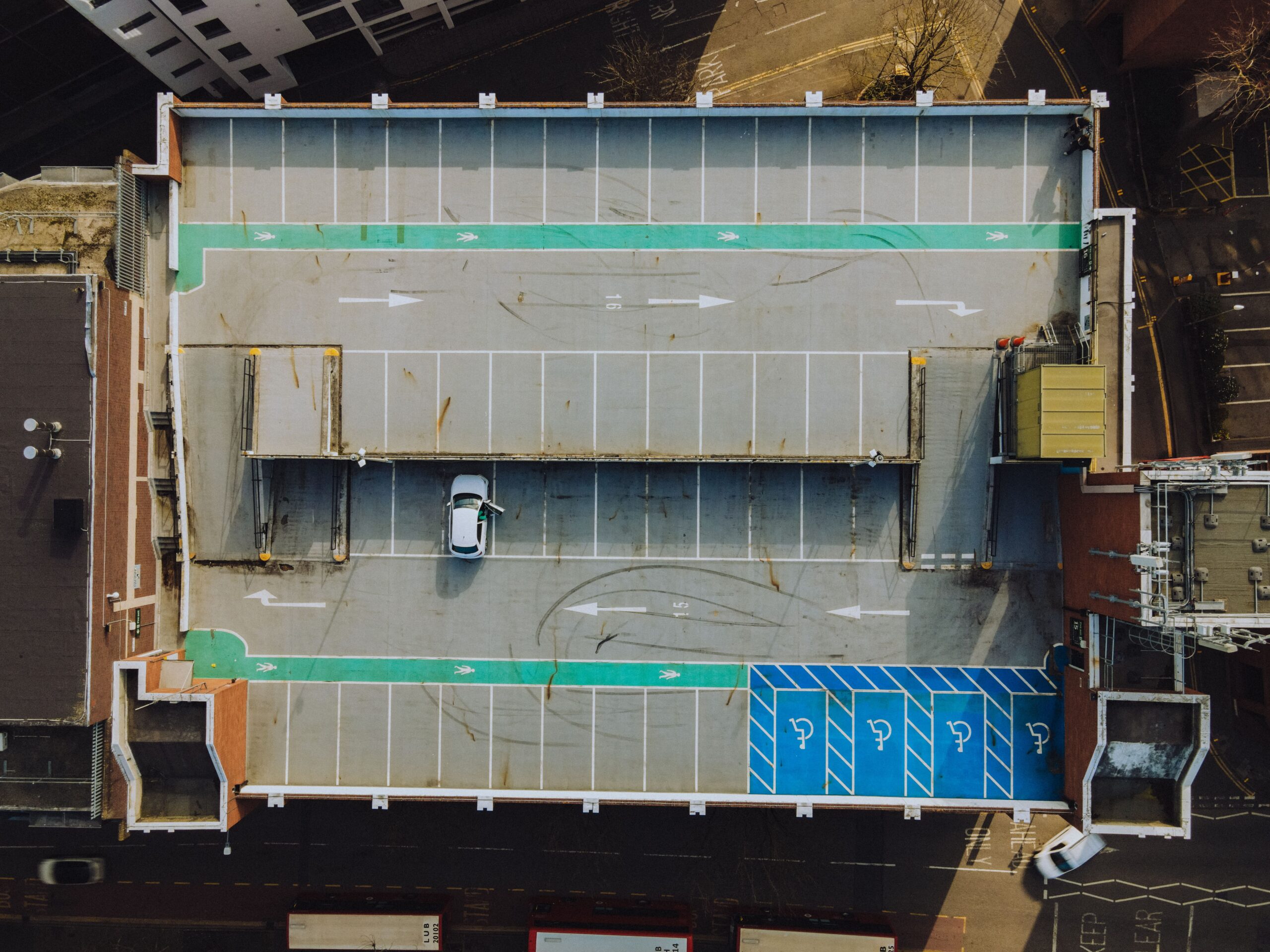
Multi-storey car parks are among the most demanding environments for reinforced concrete in the UK. They carry moving loads every day, they are open to the weather on most sides, and every winter they receive a steady supply of de-icing salt carried in on tyres and wheel arches.
The result is predictable. Without regular inspection and protection, many car park decks develop cracking, chloride-induced corrosion and spalling well before the end of their intended life. This guide explains how that damage happens and how car park decks should be repaired. It also sets out how we approach car park projects at Apolodor LTD, from the first survey to the final deck coating.
Quick answer: Concrete car park decks are repaired by first surveying the structure to map chloride contamination, delamination and reinforcement corrosion, then breaking out damaged concrete, treating or supplementing corroded steel, reinstating with structural repair mortars, sealing joints and applying a trafficable deck protection system. Repairs are usually phased by level so the car park stays open.
Why Do Car Park Decks Deteriorate?
Car parks combine almost every cause of concrete deterioration in one structure.
- Chlorides from de-icing salts. Salt-laden water drips from vehicles and ponds on the deck. Chlorides soak into the concrete and break down the protective layer around the reinforcement.
- Cracking and joint failure. Thermal movement and traffic loading open cracks and wear out expansion joints, giving water and salt a direct route into the slab.
- Carbonation. On covered levels, carbon dioxide gradually reduces the alkalinity of the concrete, which can also leave reinforcement unprotected over time.
- Abrasion. Tyres, turning movements and cleaning machinery wear away the surface, exposing aggregate and reducing cover.
- Poor drainage. Flat or badly falling decks hold water, which keeps the concrete wet and concentrates salts.
The consequences can be serious. The partial collapse of the Pipers Row car park in Wolverhampton in 1997 is still widely referenced in the UK as an example of why the condition of car park structures must be managed carefully.
Step 1: Carry Out a Condition Survey
Repairs should never start without a proper survey. A car park condition survey typically includes:
- A visual inspection of every level, including soffits, columns, joints and drainage
- Hammer or chain-drag testing to locate delaminated concrete
- Cover measurements to check the depth of concrete protecting the steel
- Chloride and carbonation testing at representative locations
- Half-cell potential mapping to identify areas where corrosion is likely to be active
The results show not only where damage is visible today, but where it is likely to appear next. Our guide to detecting early signs of reinforcement corrosion explains these tests in more detail. At Apolodor LTD, we do not price car park repairs from photographs. We survey first, then give the client a written report showing what needs doing now and what can be planned for later.
Step 2: Make Safe and Plan the Phasing
Loose concrete on soffits and deck edges must be removed or secured before anything else, because falling debris is a risk to drivers and pedestrians. The repair programme is then divided into zones, so parking and traffic flow can continue on the levels not being worked on.
Effective phasing is one of the most important parts of any car park project. On our projects, the sequence of levels and zones is agreed with the operator before work starts, so they know exactly which bays will be closed and when. We cover the principles in our article on minimising downtime during commercial concrete repairs.
Step 3: Break Out and Treat the Reinforcement
Damaged and contaminated concrete is removed back to sound material, including behind the reinforcement where corrosion has progressed around the bar. The steel is cleaned to remove rust, and any bars that have lost significant section are assessed by an engineer and supplemented where necessary.
Where chloride levels are high in the surrounding concrete, patching only the visible damage is rarely enough. The breakout should extend to all concrete the survey identified as contaminated, otherwise corrosion can restart just outside the repaired area. Our guide to repairing concrete affected by coastal salt spray explains how chloride-contaminated concrete is dealt with.
Step 4: Reinstate the Concrete
Repairs are reinstated with repair mortars or concretes that meet BS EN 1504-3, usually class R3 or R4 for structural elements. Material choice depends on repair depth, whether the repair is horizontal or overhead, and how quickly the area needs to return to traffic. Correct curing is essential, because rapid drying on open, windy car park levels is a common cause of cracked repairs. We use repair systems from Sika, Ronacrete and Fosroc, selected for the depth of each repair and the time available before each zone reopens.
Step 5: Repair Joints and Cracks
Expansion and movement joints are replaced or resealed with systems designed for vehicle traffic. Stable cracks can be sealed or injected, while live cracks need flexible treatment. Our guide to filling and sealing expansion joints in concrete covers the detailing in more depth.
Step 6: Protect the Deck
A trafficable deck coating or membrane is one of the most effective measures for stopping chlorides from reaching the reinforcement in future. Systems range from penetrating sealers on lightly used levels to multi-layer elastomeric membranes with wearing courses on exposed top decks and ramps. Coatings also improve slip resistance, which matters on ramps and pedestrian routes.
How Long Do Car Park Repairs Last?
Well-executed repairs combined with a deck protection system can extend the life of a car park by many years. Without protection, repairs often fail within a few winters because chlorides continue to enter the slab. Regular inspection and maintenance of coatings and joints are what keep the structure performing.
How Apolodor LTD Delivers Car Park Repairs
Every car park we work on starts with the same question: why is the deck failing? Patching visible spalls without dealing with chlorides, joints and drainage simply books the next repair. Our approach is to diagnose first, repair to BS EN 1504 principles, and finish with the protection that stops the damage coming back.
Just as important to operators, we plan the work so the car park keeps earning. Make-safe works come first, repairs follow in agreed zones, and the client receives clear records of what was repaired and where, which makes future inspections and budgeting far easier.
Areas we Cover
We provide concrete repair services for car park deks across the UK, including:
- London
- Manchester
- Birmingham
- Liverpool
- Leeds
- Nottingham
- Bristol
- Brighton
- Cardiff
- Plymouth
- Luton
- Reading
- Norwich
- Swindon
- Portsmouth
- Oxford
- Ipswich
- Maidstone
- Cambridge
- Southampton
- Slough
- Warrington
- Sheffield
- Leicester
- Coventry
- Milton Keynes
- Northampton
- Derby
- Stoke-on-Trent
- Wolverhampton
- Hull
- Exeter
- Gloucester
- Sunderland
- York
- Peterborough
- Chelmsford
- Newcastle
- Bradford
- Bournemouth
- Swansea
- Newport
- Middlesbrough
- Preston
- Blackpool
- Bolton
- Stockport
- Huddersfield
- Lincoln
- Worcester
- Colchester
- Canterbury
Key Takeaways
- Chloride-induced corrosion from de-icing salts is the main cause of car park deck damage in the UK
- A full condition survey should always come before repairs
- Repairs must address contaminated concrete and corroding steel, not just visible spalls
- Deck coatings and well-maintained joints are essential to stop the damage returning
- Phased working allows most car parks to remain open during repairs
Frequently Asked Questions
How often should a multi-storey car park be inspected?
Car parks should have routine visual inspections at regular intervals and more detailed structural inspections periodically. The Institution of Structural Engineers publishes guidance on inspection and maintenance of car park structures, and your engineer will recommend intervals based on age and condition.
Can car park repairs be done in winter?
Yes, but cold and wet weather affects curing and coating application. Temporary enclosures and suitable materials allow many repairs to continue through winter.
Is a deck coating really necessary after repairs?
On exposed or heavily salted decks, yes. Without a protective system, chlorides will continue to penetrate the concrete and new damage will develop around the repairs.
What does a car park repair project cost?
Costs depend on the extent of damage, access, phasing and the protection system chosen. A condition survey is the only reliable basis for a budget. Our overview of the cost of concrete repairs in the UK explains the main factors.
Get Expert Help With Your Car Park
Apolodor LTD carries out specialist concrete repairs on car parks across the UK, from condition surveys to phased repair and deck protection. Call 07808 709670 or contact us here.