
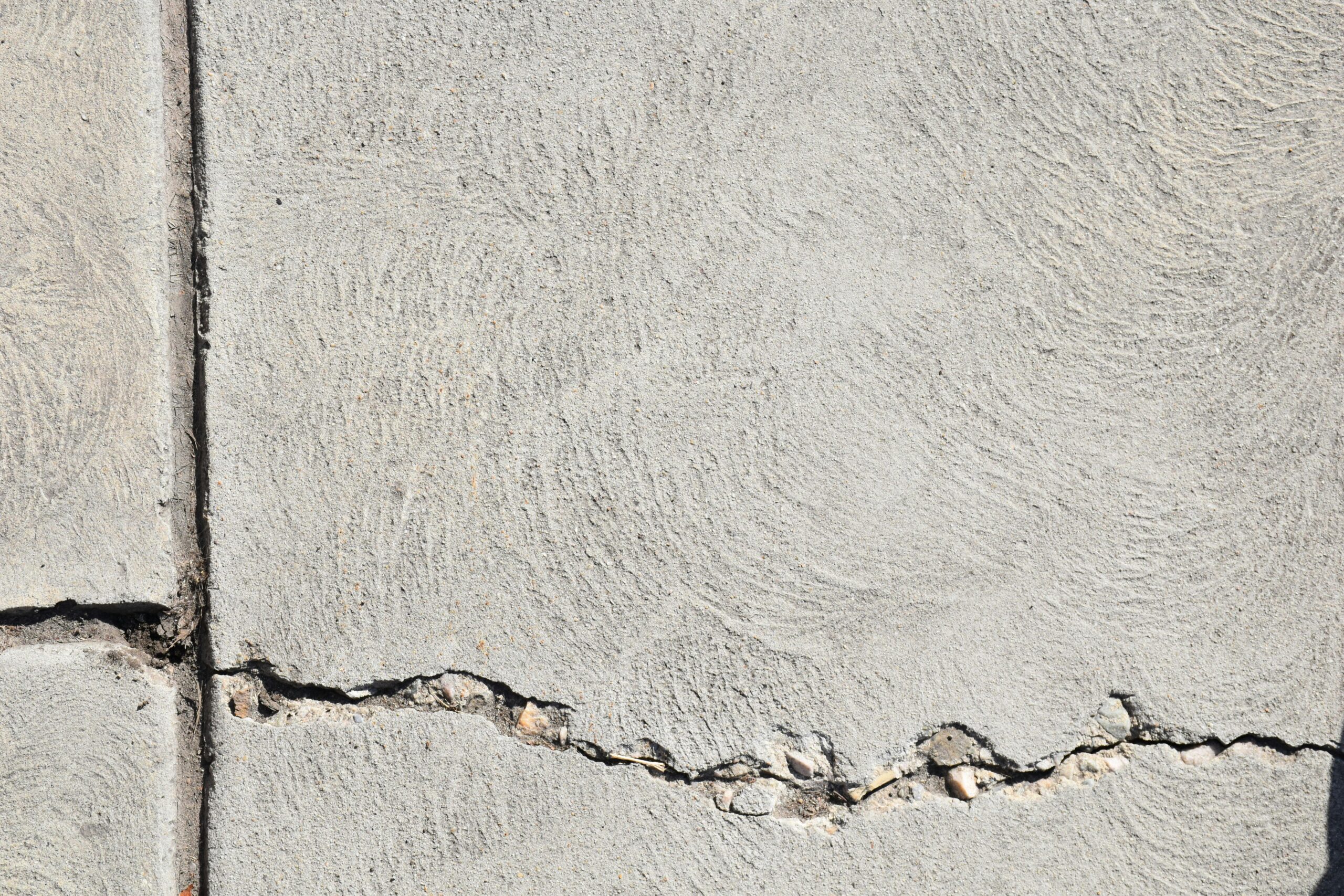
How to Repair Concrete Affected by Tree Root Damage
Tree root damage to concrete is a common but frequently misunderstood problem in UK properties. Roots do not aggressively seek out and attack concrete — but they do exploit existing weaknesses in search of moisture and oxygen, and when they find a way into joints, cracks, or porous sections of concrete, the consequences for the structure can be significant.
Repairing concrete affected by tree roots requires more than filling cracks or resurfacing damaged areas. Without addressing both the root intrusion and the conditions that allowed it to occur, repairs will fail and the problem will return.
How Tree Roots Damage Concrete
Tree roots follow the path of least resistance in their search for water and nutrients. They exploit existing cracks, open joints, and porous zones in concrete — and once inside, their growth creates progressive internal pressure that widens cracks, forces sections apart, and ultimately causes surface failure, heaving, and structural displacement.
The mechanism is gradual but relentless. A fine root that enters a hairline crack in a concrete slab or pavement exerts minimal initial pressure. As the root grows in diameter, that pressure increases year on year. The concrete, which cannot yield without cracking, eventually gives way.
Tree root damage typically affects pavements, driveways, and pathways adjacent to trees, drainage systems and the concrete structures around them, retaining walls where trees are planted on the retained side, foundations of buildings close to large or established trees, and external slabs and hardstanding areas in gardens and commercial grounds.
The extent of damage is often larger than it appears at the surface. Roots may have travelled considerable distances beneath apparently undamaged concrete before breaking through at a visible location.
Assessing the Full Extent of Root Damage
Before any repair is planned, the full extent of both the concrete damage and the root intrusion must be established. Repairing only the visible damage without understanding how far the roots have travelled is one of the most common reasons tree root repairs fail within a short time.
Assessment should include mapping the pattern and extent of cracking and heaving across the affected area, identifying which tree or trees are responsible, determining whether drainage systems in the area have been compromised, and assessing the structural significance of the damage — whether heaving or displacement affects load-bearing elements or safety-critical surfaces such as steps and ramps.
Where drainage is suspected to be involved, understanding how poor drainage contributes to concrete foundation erosion is relevant, as root-damaged drainage systems can exacerbate moisture movement beneath concrete and accelerate the deterioration of adjacent structures.
Step 1: Address the Root Cause — Literally
No concrete repair affected by tree root intrusion will last if the root problem is not resolved first. This is a fundamental principle that is frequently ignored in favour of simply patching the visible damage.
Root removal — where roots have penetrated concrete, they must be cut and removed as part of the repair process. Cutting large structural roots can destabilise a tree, creating a different safety risk. Arboricultural advice should be sought before removing significant roots from established trees, particularly where trees are protected by Tree Preservation Orders (TPOs).
Root barrier installation — where a tree is to be retained and the risk of future root intrusion is significant, root barriers can be installed to redirect root growth away from the structure. These are typically impermeable sheets installed vertically in the soil between the tree and the concrete.
Tree removal — in some cases, where the tree is causing progressive and repeated damage, removal may be the only long-term solution. This requires appropriate permissions and, in conservation areas, prior approval.
Drainage improvement — if root intrusion into drainage systems has contributed to the concrete damage, the drainage must be repaired before concrete repairs are carried out. Addressing moisture accumulation around foundations is particularly important here, as saturated ground accelerates both root spread and concrete deterioration.
Step 2: Remove Damaged Concrete
Once the root issue has been addressed, all damaged, cracked, heaved, or displaced concrete must be removed. Attempting to repair over root-damaged concrete without full removal of the affected sections is rarely successful, the damage beneath will continue to cause problems and the repair will fail prematurely.
Removal should extend beyond the visibly damaged area to expose sound, unaffected concrete at all boundaries, sufficiently deep to remove all root material from within the concrete structure, and across the full depth of the slab or element where roots have caused through-thickness displacement.
Where roots have caused heaving, the subgrade beneath must also be inspected and reinstated before new concrete is placed. Placing new concrete over disturbed, root-riddled subgrade is a direct route to recurrence of the problem.
Step 3: Prepare the Subgrade
Where concrete slabs have been heaved or displaced by root growth, the subgrade beneath them is almost certainly disturbed. Roots, organic material, and voids left by removed roots must all be addressed before any concrete reinstatement takes place.
Preparation of the subgrade typically involves removing all root material from the formation level, compacting any disturbed or softened subgrade material, reinstating a suitable sub-base layer where the original has been disturbed, and checking for and addressing any drainage issues at formation level.
Placing concrete onto an inadequately prepared subgrade is one of the most common causes of early slab failure in areas affected by tree root damage. The new concrete will follow the movement of an unstable subgrade just as readily as the old did.
Step 4: Reinstate the Concrete
With the subgrade properly prepared and the root issue resolved, concrete reinstatement can proceed. The approach depends on the scale and nature of the damage.
For pavement and driveway slabs, full-depth replacement of the affected bays is typically the most reliable approach. Partial-depth repairs to root-damaged slabs are difficult to execute successfully because the damage rarely has a clean, well-defined lower boundary.
For structural elements such as retaining walls, columns, or foundations where root intrusion has caused cracking or displacement, the repair specification must account for the structural role of the element. Professional engineering assessment may be needed to determine whether simple repair is sufficient or whether structural reinstatement or strengthening is required.
For concrete stairs and ramps where root damage has caused heaving or cracking, the repair must restore geometric accuracy — consistent tread and riser dimensions, level surfaces, and appropriate slip-resistant finishes in high-risk areas, in addition to structural integrity.
For retaining walls where roots from trees on the retained side have caused cracking or displacement, preventing water seepage through the wall is often a concurrent repair requirement alongside the structural concrete works.
Step 5: Joint Detailing to Prevent Future Intrusion
One of the most effective preventive measures against future root intrusion is correct joint detailing in reinstated concrete. Roots enter concrete through joints, cracks, and porous zones — and eliminating these entry points significantly reduces the risk of recurrence.
Key joint detailing measures include using correctly specified and installed joint sealants that remain flexible and watertight over time, installing root barriers at joint locations where trees are nearby, specifying concrete with low permeability to reduce moisture pathways that attract roots, and ensuring edges and corners are well-formed and protected.
Understanding how to correctly fill and seal joints in concrete is directly applicable here — joint quality is as important in preventing future root damage as it is in managing thermal movement and water ingress.
Step 6: Protect the Repaired Concrete
Newly reinstated concrete in areas affected by tree root damage should be protected to improve its long-term resistance to moisture and further deterioration. Protective treatments reduce the permeability of the concrete surface, limiting the moisture pathways that attract root growth and slowing the processes that create the cracks and weaknesses through which roots gain access.
For external concrete in garden, driveway, or pavement settings, appropriate protective systems include penetrating sealers, surface-applied anti-carbonation coatings, and — where slip resistance is required — correctly specified anti-slip surface treatments.
The broader principles of extending the service life of protective coatings through routine care apply equally to concrete repaired after tree root damage — regular inspection and maintenance of both the concrete and the surrounding vegetation helps prevent the conditions that allowed root intrusion in the first place from developing again.
Legal and Planning Considerations
Tree root damage repairs in the UK often involve legal and planning considerations that can significantly affect what work is permissible and how it must be carried out.
Tree Preservation Orders (TPOs) — any works that could affect the roots of a protected tree, including root cutting during concrete repair, require prior approval from the local planning authority. Carrying out unauthorised works to a protected tree carries significant financial penalties.
Conservation areas — in conservation areas, restrictions apply to works affecting trees of a certain size, even without a specific TPO. Prior notification is required.
Subsidence and insurance — where tree root damage has caused or contributed to foundation movement or structural damage, the matter may involve insurers and requires specialist structural assessment before repair works are specified.
Boundary disputes — where the tree causing damage belongs to a neighbouring property, legal advice may be needed before root removal or other works affecting the tree are carried out.
When Professional Assessment Is Required
Tree root damage repairs that involve structural elements, protected trees, insurance claims, or significant ground movement should always involve professional assessment before work is specified or commenced. Professional input is particularly valuable where foundations or structural elements are affected, the tree is protected or the property is in a conservation area, ground movement or settlement has occurred alongside the concrete damage, drainage systems have been compromised, or previous repairs have already failed.
The interaction between tree root management, concrete repair, drainage improvement, and ground stability makes tree root damage one of the more complex concrete repair scenarios, and one where the cost of getting it wrong is typically much higher than the cost of getting specialist advice early.
Areas We Cover
We provide concrete repair services for tree root damage across the UK, including:
- London
- Manchester
- Birmingham
- Liverpool
- Leeds
- Nottingham
- Bristol
- Brighton
- Cardiff
- Plymouth
- Luton
- Reading
- Norwich
- Swindon
- Portsmouth
- Oxford
- Ipswich
- Maidstone
- Cambridge
- Southampton
- Slough
- Warrington
- Sheffield
- Leicester
- Coventry
- Milton Keynes
- Northampton
- Derby
- Stoke-on-Trent
- Wolverhampton
- Hull
- Exeter
- Gloucester
- Sunderland
- York
- Peterborough
- Chelmsford
Address Root Damage Before It Becomes a Structural Problem
Tree root damage to concrete is progressive. Without intervention, roots continue to grow, cracks continue to widen, and what begins as a heaved paving slab can eventually become a foundation or retaining wall problem. Early, correctly scoped repair, addressing both the root issue and the concrete damage, is always more cost-effective than reactive repair after the damage has escalated.
For expert assessment and repair of concrete affected by tree root damage: 📞 07808 709670 or contact us here.