
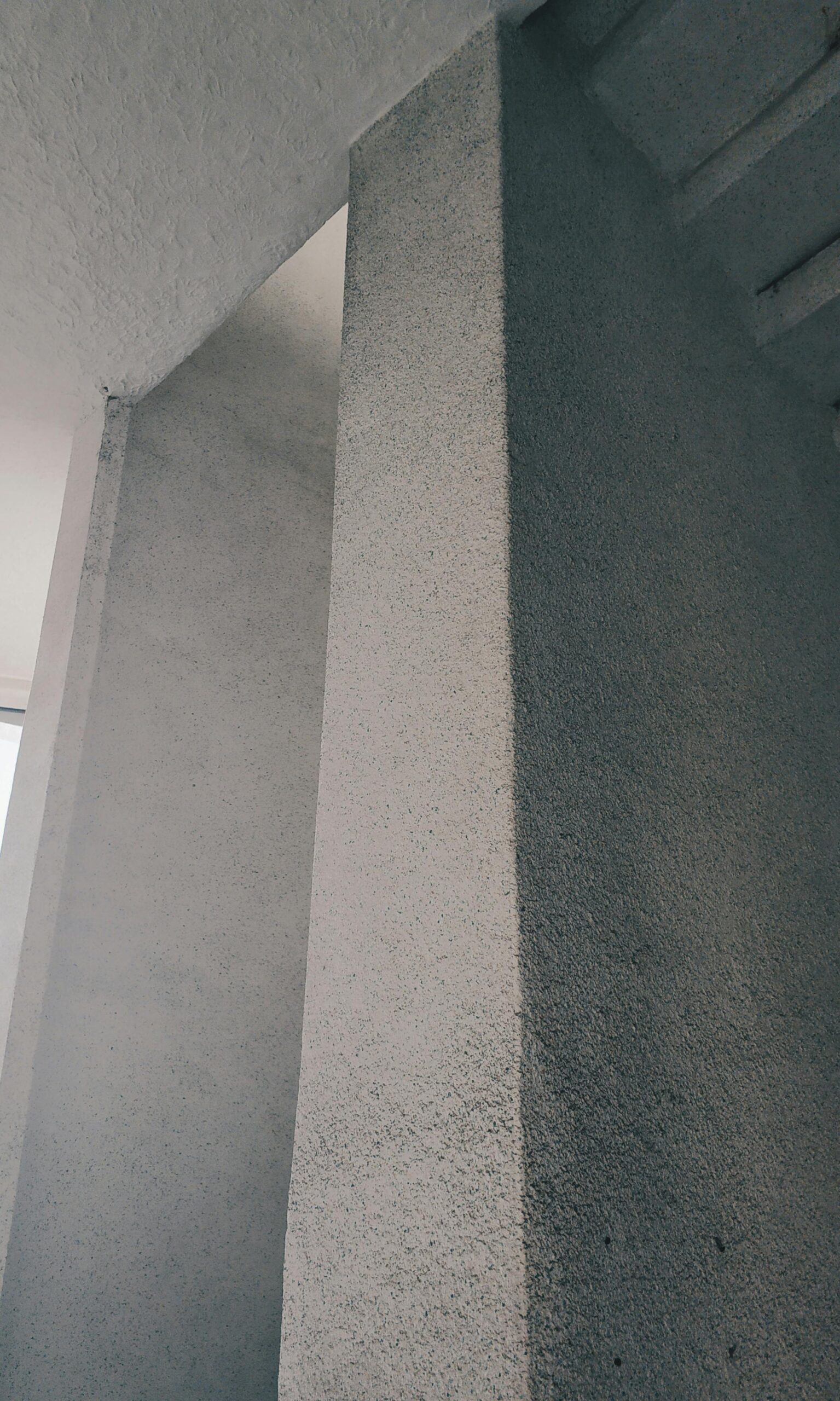
Damaged concrete edges and corners are a common issue in both residential and commercial buildings. Whether caused by impact, wear, or environmental exposure, broken arrises and chipped corners can quickly worsen if left untreated. Knowing how to repair concrete edges and corners without recasting allows defects to be addressed efficiently, without the disruption and cost associated with removing and replacing entire sections of concrete.
In many cases, localised repair techniques provide a durable and visually consistent solution, provided the damage is properly assessed and repaired using the correct methods.
Why Concrete Edges and Corners Deteriorate First
Edges and corners are inherently more vulnerable than flat surfaces. They are exposed to impact, abrasion, and weathering, and often receive less concrete cover during construction.
Common causes of edge and corner damage include:
- Impact from vehicles, trolleys, or foot traffic
- Freeze–thaw action causing surface breakdown
- Poor compaction during original construction
- Corrosion of reinforcement close to edges
Once damage begins, sharp edges break down rapidly, allowing moisture to penetrate deeper into the concrete.
When Recasting Is Not Necessary
Full recasting is rarely required unless damage is extensive or structural integrity is compromised. In most cases, localised repairs can restore edges and corners effectively.
Recasting is typically unnecessary when:
- Damage is confined to surface layers
- Reinforcement is not significantly corroded
- The surrounding concrete remains sound
Understanding the extent of deterioration is the first step in deciding the most appropriate repair approach.
Step 1: Assess the Extent of Damage
Before carrying out any repair, the damaged area should be carefully assessed.
Key considerations include:
- Depth of deterioration
- Presence of loose or friable concrete
- Condition of any exposed reinforcement
- Whether damage is ongoing or historic
Surface damage often accompanies other forms of deterioration, similar to the indicators discussed when identifying the signs your concrete needs repair.
Step 2: Break Out Unsound Concrete
All loose, cracked, or delaminated concrete must be removed back to sound material. This is essential to ensure the repair bonds effectively and does not fail prematurely.
Breaking out should:
- Follow the true extent of deterioration
- Avoid feather edges
- Create clean, well-defined repair boundaries
Leaving weak material behind is one of the most common reasons edge repairs fail.
Step 3: Treat or Protect Exposed Reinforcement
Where reinforcement is exposed, it must be cleaned and treated before repair. Corrosion products should be removed to prevent continued expansion beneath the repair.
Depending on condition, this may involve:
- Mechanical cleaning of steel
- Application of corrosion protection systems
- Increasing cover where practical
Reinforcement-related deterioration is closely linked to issues explored when assessing concrete spalling causes and repair solutions.
Step 4: Select the Appropriate Repair Material
Repair materials must be suitable for edge and corner applications. They should provide good adhesion, adequate strength, and resistance to impact and weathering.
Common options include:
- Polymer-modified repair mortars
- Rapid-setting edge repair compounds
- Form-and-pour repair systems for complex profiles
The correct choice depends on exposure conditions and expected loading, forming part of understanding the different ways concrete repairs are carried out.
Step 5: Rebuild the Edge or Corner Profile
Edges and corners often require formwork or careful hand-finishing to recreate the original profile.
Successful rebuilding involves:
- Using temporary formwork where necessary
- Compacting repair material properly
- Achieving clean, durable arrises
Poor profiling can leave weak edges that are prone to repeat damage.
Step 6: Cure and Protect the Repair
Proper curing is essential to prevent shrinkage cracking and ensure long-term durability. Repairs should be protected from rapid drying, rain, and frost during early curing stages.
In exposed locations, additional protection may be required to reduce future wear and weathering, particularly in areas subject to repeated impact or moisture.
Protective measures often play a key role in extending repair life, as discussed when reviewing how weather-resistant coatings extend the life of concrete surfaces.
UK Climate Considerations
The UK climate places significant stress on concrete edges and corners. Freeze–thaw cycles, frequent rainfall, and de-icing salts all accelerate deterioration, particularly where repairs are poorly detailed.
Edges exposed to these conditions require robust materials and careful detailing to perform reliably over time. Environmental effects on concrete performance are closely linked to how weather affects concrete in the UK.
Integrating Edge Repairs with Broader Maintenance
Edge and corner damage is often a symptom of wider issues, such as drainage problems, movement, or impact risk. Addressing these underlying causes helps prevent repeat damage.
This integrated approach is standard practice within professional concrete repairs across the UK, where durability and long-term performance are prioritised over short-term fixes. In urban environments, especially where buildings are exposed to heavy use or restricted access, experience is particularly important. This experience has taken us to projects across the UK, each with its own environmental and structural challenges, operating in all major areas including:
- London
- Manchester
- Birmingham
- Liverpool
- Leeds
- Nottingham
- Bristol
- Brighton
- Cardiff
- Plymouth
- Luton
- Reading
- Norwich
- Swindon
- Portsmouth
- Oxford
- Ipswich
When Specialist Input Is Advisable
Professional advice is recommended where:
- Damage is recurring or widespread
- Reinforcement corrosion is present
- Edges are load-bearing or safety-critical
- Repairs must match architectural finishes
In these cases, confirming the repair strategy before proceeding can prevent ineffective repairs and unnecessary expense.
You can also speak directly with a specialist by calling 07808 709670.
Final Thoughts
Knowing how to repair concrete edges and corners without recasting allows damage to be addressed efficiently while preserving the surrounding structure. With proper assessment, preparation, and material selection, localised repairs can restore both function and appearance.
Edges and corners may be small details, but when repaired correctly, they play a big role in protecting concrete from ongoing deterioration.