
How to Detect Early Signs of Concrete Reinforcement Corrosion
Reinforced concrete is designed to be durable, but over time the steel reinforcement embedded within it can begin to corrode. Reinforcement corrosion in concrete is one of the most serious and costly forms of deterioration, often progressing unnoticed beneath the surface until visible damage appears. Detecting the early warning signs is critical to preventing structural damage and expensive remedial works.
In many cases, corrosion begins long before cracking or spalling is visible. Understanding what to look for allows problems to be addressed while repairs are still straightforward and cost-effective.
What Causes Reinforcement Corrosion in Concrete?
Steel reinforcement is normally protected by the alkaline environment created by concrete. However, this protective layer can be compromised by external factors, allowing corrosion to begin.
The most common causes include:
- Carbonation reducing the alkalinity of the concrete
- Chloride ingress from de-icing salts or marine exposure
- Persistent moisture penetration
- Cracking that allows water and oxygen to reach the steel
Once corrosion starts, the steel expands as it rusts, exerting pressure on the surrounding concrete and accelerating damage.
Why Early Detection Is So Important
Corrosion is not a static process. Left untreated, it progresses from minor steel oxidation to cracking, delamination, and eventually concrete spalling. At advanced stages, load-bearing capacity can be affected.
Early detection allows targeted repairs to be carried out before damage spreads. This is significantly more effective than waiting until visible deterioration demands large-scale intervention.
Early Visual Signs of Reinforcement Corrosion
Rust staining on the concrete surface
Brown or orange staining is often one of the first visible indicators. These stains usually follow the line of the reinforcement beneath the surface and suggest moisture is reaching the steel.
While staining alone does not confirm structural damage, it should always prompt further investigation.
Hairline cracking following reinforcement lines
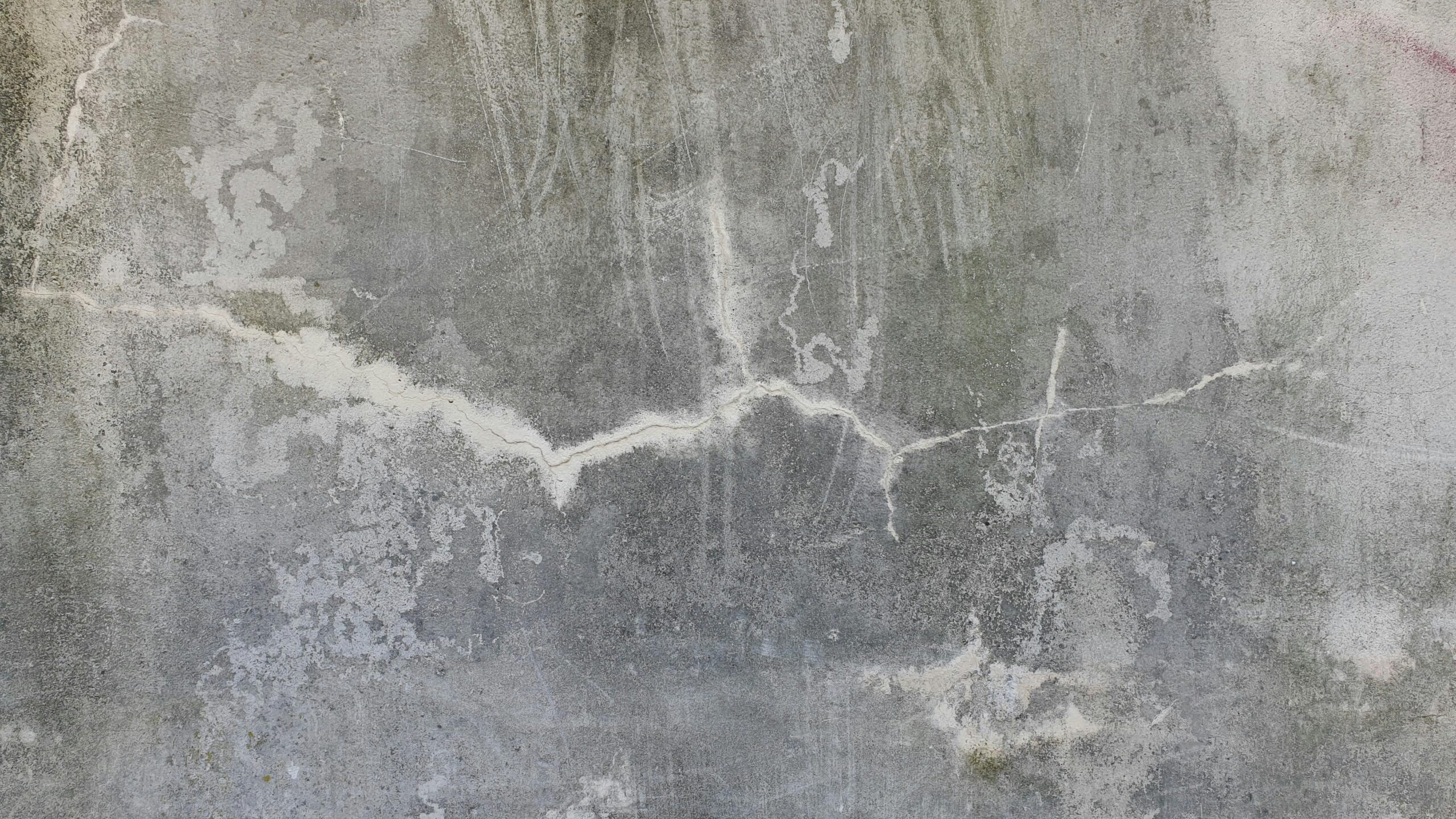
Fine cracks that run in straight lines, often parallel to edges or structural elements, can indicate expanding steel beneath the surface. These cracks may initially appear insignificant but often widen as corrosion progresses.
Cracking patterns are frequently linked to broader deterioration mechanisms, including those associated with the causes of concrete damage.
Localised surface delamination
Delamination occurs when layers of concrete separate internally due to pressure from corroding reinforcement. This may be detected by hollow-sounding areas when tapped or by slight surface lifting.
At this stage, intervention is strongly recommended to prevent further material loss.
Structural and Environmental Warning Signs
Increased moisture retention
Areas that remain damp longer than surrounding concrete can indicate water ingress paths reaching the reinforcement. Moisture is a critical driver of corrosion and should never be ignored.
In many cases, this is linked to broader waterproofing failures rather than isolated defects.
Spalling and exposed reinforcement
Spalling is a late-stage symptom where concrete breaks away, exposing corroded steel. Once this occurs, corrosion tends to accelerate rapidly.
If spalling is present, it usually confirms that earlier warning signs were missed. This type of deterioration is explored further when assessing concrete spalling causes and repair solutions. Fortunately, there are ways that we can repair spalled concrete once corrosion becomes visible
Methods Used to Detect Early Corrosion
Visual inspection is only the first step. Where corrosion is suspected, further assessment may include:
- Cover depth measurement
- Carbonation testing
- Chloride content analysis
- Half-cell potential testing
These methods help determine the extent of corrosion and whether it is active or localised.
Correct diagnosis is essential before deciding on any repair strategy, as different repair systems respond differently to ongoing corrosion processes.
How UK Conditions Accelerate Corrosion
In the UK, reinforcement corrosion is often driven by a combination of moisture exposure and environmental conditions. Rainfall, humidity, freeze–thaw cycles, and airborne pollutants all contribute to deterioration.
Urban structures are particularly vulnerable due to traffic pollution and restricted drying conditions, while coastal and exposed sites face increased chloride exposure. The broader impact of climate on deterioration is closely linked to how weather affects concrete in the UK. Because site conditions vary significantly by location, much of our work is spread across the UK.
We serve the major cities, including:
- London
- Manchester
- Birmingham
- Liverpool
- Leeds
- Nottingham
- Bristol
- Brighton
- Cardiff
- Plymouth
- Luton
- Reading
- Norwich
- Swindon
- Portsmouth
- Oxford
- Ipswich
Addressing Corrosion Before Repairs Are Needed
Once early signs are identified, the next step is to determine the most appropriate intervention. This may include:
- Localised concrete repairs
- Corrosion inhibitors
- Protective coatings
- Cathodic protection systems
Selecting the correct solution depends on the extent of corrosion and the environment in which the structure operates. This decision-making process forms part of understanding the different ways concrete repairs are carried out.
When Professional Assessment Is Essential
Professional assessment should be sought if:
- Rust staining or cracking is increasing
- Moisture ingress is persistent
- Structural elements are affected
- The building is commercial or public-facing
Early intervention is a standard part of professional concrete repairs across the UK, where identifying corrosion early can significantly reduce long-term repair costs.
Get Advice Before Corrosion Escalates
Detecting reinforcement corrosion in concrete at an early stage is one of the most effective ways to protect structural integrity and control repair costs.
If you are unsure whether corrosion is present or progressing, obtaining an early professional opinion can prevent minor issues from becoming major structural problems.
You can also speak directly with a specialist by calling 07808 709670.
Early detection saves concrete. Early action saves money.